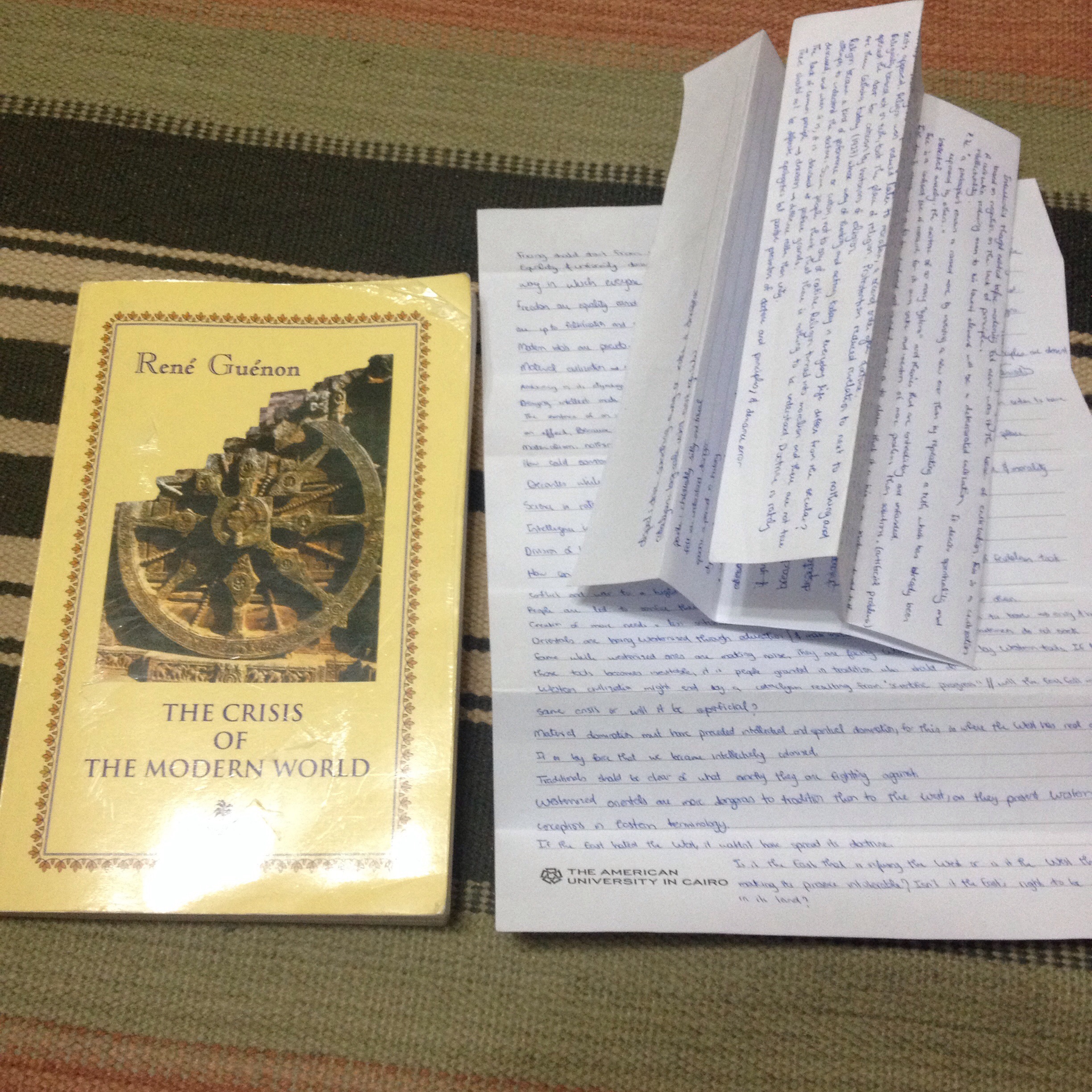
Book Review: The Crisis of the Modern World by Rene Guenon
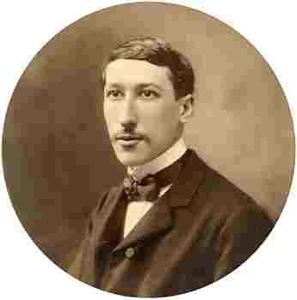
Eighty six years after its initial publishing, this book is as relevant as ever. This masterpiece by French Metaphysician Rene Guenon (also known as Shaykh Abdal Wahid Yahya) was written in 1927, a decade after the Great War and a couple of years before the Great Depression. While, at that time, many people ‘felt’ that something is going wrong, Guenon ‘understood’ exactly the reason why things are going wrong. He makes the clear distinction between feeling and understanding in the very first chapter of the book then he later says that his target readers are those who already have this feeling. He does not care about delivering his views to the public, but to the intellectual elect that is not immersed in materialism and that actually has the will and intelligence to take action.
Throughout the book, Guenon compares between what is traditional and what is modern. He claims that modernity, initiating in the West, isolated it from the traditional spirit that has always existed there and that had its final traces manifested in Catholicism. By tradition, Guenon means transcendent knowledge that could only be attained by intellectual intuition, an intelligence totally ignored by the moderns, or through direct contact with thoso who attain it. In contrast to traditional knowledge, there is modern knowledge that is rooted in modern philosophy. He believes that philosophy as we know it does not reflect the etymological meaning of the word. Philosophy comes from the root ‘philo-sophia’ or the love of wisdom. It is only means by which wisdom could be reached, not wisdom in itself as what is understood in the modern world.
Such confusion opened the door for ideas such as rationalism to flourish and become generally accepted in the West as opposed to intellectual intutition. This decadence added to the confusion within their minds that led to the negation of the supernatural, anything that cannot be conceived by the senses, hence humanism, individualism and the intellectual anarchy resulting from the negation of higher order of knowledge giving the rise to all the ‘isms’ we hear in social sciences. That was a time when “a philosopher’s renown is raised more by inventing a new error than by repeating a truth which has already been expressed by others.”
The decline in ‘religiousity’ apparent in the modern West is the result of none other than these ideas. The negation of higher order, of authority, allowed everyone even the ignorant to express their views about sacred texts. Religion was open to criticism by the incompenet and to private judgement driven by personal desires. An inevitable result was having religion controlled by the desires of individuals rather than the opposite. The tempting negation of authority (among other reasons) prevented the Church from taking required action.
Guenon defines materialism as giving priority to ideas of material order and that have a direct sensible effect. Its origin according to him lies in denying intellectual intution as means of reaching the truth. He even questions the West’s desire to find truth, claiming that it got totally replaced by utility. This, Guenon concludes, is what defines modernity. A Western system that will lead to its own destruction, be it through certain applications of what he calls ‘profane’ modern science, or through the spread of the false ‘isms’ throughout the world leading to more confusion than ever apparent in human history. This could be noticed in the confusion now felt in the East, where traditonal principles are still believed to exist but globalization (Westernization to be more accurate), by spreading anti-traditional knowledge and its applications, is leading the youth to act in the opposite direction of what they were raised up to believe. We can all feel this confusion and feel helpless about it. However, Guenon concludes his book by offering sound solutions. He notes that he doesn’t have the time to engage in philosophical discussions and he only does so when needed. His target readers, as mentioned above, are those who already ‘feel’ that something wrong is going on, and he urges them to take action instead of philosophizing. Otherwise, it will be too late.
I personally enjoyed this work and am looking forward to read more of Guenon’s work, and to test its truth against events and phenomena taking place around the world.
 مدونة السعة